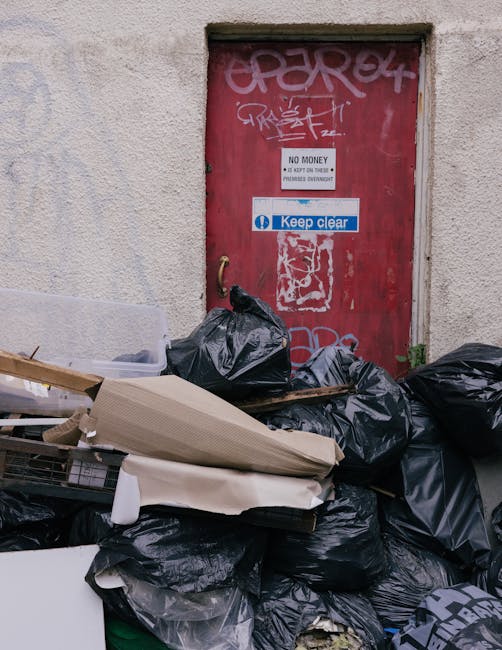
Common problems when booking rubbish clearance in RM17 estates
Booking rubbish clearance in RM17 estates sounds simple enough. You make a call, agree a price, and the clutter disappears. In real life, though, it can be a bit messier than that. Narrow access roads, shared entrances, parking restrictions, unclear quotes, and missed collection times can all turn a quick job into a frustrating afternoon. If you live in a flat, maisonette, or managed estate around RM17, the small details matter more than people expect.
This guide breaks down the common problems when booking rubbish clearance in RM17 estates, why they happen, how to avoid them, and what a smooth, well-run service should actually look like. You will also find practical booking advice, a checklist, a comparison table, and a realistic example from an estate-style clearance scenario.
Table of Contents
- Why common problems in RM17 estates matter
- How rubbish clearance bookings usually work
- Key benefits and practical advantages
- Who this is for and when it makes sense
- Step-by-step guidance
- Expert tips for better results
- Common mistakes to avoid
- Tools, resources and recommendations
- Law, compliance, standards, or best practice
- Options, methods, or comparison table
- Case study or real-world example
- Practical checklist
- Conclusion
- Frequently Asked Questions
Why Common problems when booking rubbish clearance in RM17 estates Matters
Estate clearances are not like collecting a single bin bag from a driveway. RM17 estates often include shared parking bays, controlled entry points, lifts, stairwells, concierge-style arrangements, and neighbours who are not thrilled about a van blocking the way at 8:00 on a Tuesday. That means even a straightforward rubbish clearance needs a bit of thought.
The most common problems usually come down to one of three things: poor information, poor access, or poor expectations. A provider may quote before seeing the load, underestimate how long it will take, or assume access is easier than it really is. On the resident side, people sometimes assume everything will be taken without checking what is accepted, whether the team needs parking space, or whether the job involves heavier items such as furniture or builders' waste.
Why does this matter? Because the wrong setup can lead to delays, extra charges, complaints from neighbours, or waste being left behind. And if you are already dealing with a busy move, a landlord deadline, or a garage that has slowly become a graveyard for old furniture, the last thing you need is a second job created by the first one.
Expert summary: In RM17 estates, the best rubbish clearance bookings are the ones that are confirmed clearly, priced transparently, and planned around access before the van arrives. Simple, but easy to get wrong.
How Common problems when booking rubbish clearance in RM17 estates Works
Most rubbish clearance bookings follow a similar pattern. You describe what needs removing, the provider gives an estimate or quote, a collection time is arranged, and the team arrives to load and dispose of the waste. The trouble starts when any part of that chain is fuzzy.
For estate properties in RM17, the booking process should ideally account for:
- the type of waste or items involved
- how much space the rubbish takes up
- where the property is located within the estate
- whether there are stairs, lifts, or long carry distances
- parking access for a van or loading vehicle
- any time restrictions imposed by the block or managing agent
In practice, a good provider will ask a few sensible questions before confirming. If they do not, that is not always a red flag, but it is worth being cautious. A quick estimate given over the phone can be fine for a small load. For larger clearances, especially if you are clearing a flat, loft, garage, or a mix of household waste and old furniture, more detail usually leads to a better outcome.
You will notice the difference on the day. A proper booking feels calm and organised. A poor one feels rushed, with someone peering into hallways, looking for parking, and muttering about "extra bags" that no one mentioned earlier. Not exactly ideal.
If you want to understand the wider range of jobs that can be bundled into clearance work, pages such as home clearance, flat clearance, and furniture disposal are useful reference points for the kinds of items often removed from estate properties.
Key Benefits and Practical Advantages
When a rubbish clearance is booked properly, the benefits are immediate and very practical. It is not just about getting rid of stuff. It is about removing friction from your day.
- Less stress: You are not trying to coordinate lifting, parking, and disposal yourself.
- Faster turnaround: Well-planned clearances are usually completed more quickly.
- Safer handling: Heavy or awkward items are moved by people used to doing the work.
- Cleaner shared spaces: Good planning reduces mess in stairwells, corridors, and communal areas.
- Better value: Clear scope and honest quoting lower the risk of surprise charges.
There is also a less obvious benefit: peace of mind with neighbours and building management. In estate settings, nobody wants a collection day to become the thing everyone is grumbling about on the WhatsApp group. A tidy, on-time job usually avoids that entire drama.
For bigger household jobs, it can be worth comparing related services. For example, house clearance may suit a fuller property job, while garage clearance or loft clearance can be better when the rubbish is concentrated in one area. Matching the service to the job is half the battle.
Who This Is For and When It Makes Sense
This topic matters if you are a tenant, homeowner, landlord, housing officer, letting agent, managing agent, or anyone helping a relative clear a property in RM17. Estates bring a few shared realities with them: limited parking, communal access, and the need to keep disruption down. If any of those apply, you want a clearance plan that is properly thought through.
It makes sense to book rubbish clearance when:
- you are moving out and need a fast clear-out
- old furniture has built up and storage spaces are no longer usable
- a tenant has left items behind
- a renovation has created mixed waste that should not sit around
- you are preparing a flat, maisonette, or house for sale or reletting
- the rubbish is too bulky, heavy, or awkward for normal bin collection
It may also be sensible if the job is smaller than a full clearance but still too much for standard bins. In those situations, a targeted waste removal service can be the cleaner fit. Truth be told, not every job needs a full-scale clear-out. Sometimes you just need the right service and a sensible booking.
Step-by-Step Guidance
Here is a practical way to book rubbish clearance without the usual headaches. Keep it simple, but be specific.
- List everything that needs removing. Walk through the property and note bags, furniture, broken items, appliances, and any awkward waste tucked away in cupboards or balconies.
- Separate what stays from what goes. This sounds obvious, but it is where a lot of estate bookings go sideways. One missed box can lead to a return visit.
- Check access details. Note whether the property is on the ground floor, whether there is a lift, whether parking is reserved, and whether keys or entry codes are needed.
- Ask how pricing works. Find out if the quote is based on volume, item count, labour, or a combination. Clarify whether stairs, waiting time, or difficult access could affect the price.
- Confirm the timing. In estates, collection windows matter. Ask about arrival slots and whether the team can work around quiet hours or access restrictions.
- Prepare the space. Move personal valuables, paperwork, and anything fragile out of the way before the team arrives.
- Walk through the load at the start. If the provider has not seen the waste in advance, a quick on-site check can prevent disputes later.
- Get clarity before loading begins. If something looks like it may be extra, ask the team to confirm. That conversation is much easier before the van is half full.
A small amount of preparation makes a huge difference. It can turn a potentially awkward job into something quick and boring, which is exactly what you want from rubbish clearance.
Expert Tips for Better Results
Let's face it, the best rubbish clearance jobs are rarely the most dramatic ones. They are the ones where the provider can get in, get out, and leave the place tidy. A few practical habits help a lot.
- Photograph the waste before you book. It helps you describe the job accurately and gives you a record of what was agreed.
- Be honest about volume. A few extra bags may sound harmless, but they can change the load more than you think.
- Measure awkward items. Sofas, wardrobes, mattresses, and broken appliances often take more space than people estimate.
- Tell the provider about stairs or long carries. In estate blocks, this is not a minor detail. It affects time and labour.
- Check for restricted parking. If a van cannot stop close enough, the job slows down fast.
- Ask what happens if the load changes. Good providers explain how price adjustments are handled before work starts.
One more thing. If you are clearing a property during bad weather, think about wet hallways, muddy shoes, and slippery paths. A drizzle on a grey afternoon can turn a simple carry route into a mess. It sounds petty until you are the one mopping the floor afterwards.
For estate residents dealing with particular item types, pages like furniture clearance and garden clearance can help you think through the right service choice before you book.
Common Mistakes to Avoid
This is where many people come unstuck. Most of the common problems when booking rubbish clearance in RM17 estates are preventable, but the same mistakes keep cropping up.
- Giving only a vague description. "Just a bit of rubbish" is not useful. Neither is "some old stuff in the flat."
- Forgetting shared access rules. Some estates have controlled access, time restrictions, or loading rules that matter a lot.
- Assuming the quote is fixed without checking. Always understand what could change the price.
- Leaving everything until the last minute. Estate access is often easier in certain windows. Miss them and you may wait longer than expected.
- Not separating special items. Some items need different handling, and a normal clearance team may need advance notice.
- Blocking corridors or entrances. A small pile in a shared area can become a big complaint very quickly.
Another common mistake is choosing the cheapest quote without asking what is included. Cheap can be fine. Cheap and unclear is where trouble begins. There is a difference, and a fairly big one.
Tools, Resources and Recommendations
You do not need specialist software to book a decent clearance, but a few basic tools help.
- Phone camera: Take clear photos of everything to be removed.
- Notes app or paper list: Write down items, access details, and time restrictions.
- Tape measure: Useful for bulky items or tight stairwells.
- Estate or block information: Keep entry instructions, parking notes, and contact details handy.
- Check your booking confirmation: Make sure date, time, service scope, and price are all understood.
If you want a broader sense of how service quality and business practices are presented, the site's about us page is useful background, while pricing and quotes can help set expectations before you commit.
For trust and process reassurance, it is also worth looking at pages such as insurance and safety, health and safety policy, and recycling and sustainability. They help show how a provider thinks about risk, handling, and disposal standards.
Law, Compliance, Standards, or Best Practice
For rubbish clearance in England, the key point is simple: waste must be handled and disposed of responsibly. If you are booking a clearance service, you should expect sensible identification of what is being removed, proper transport, and lawful disposal routes. You do not need to become a waste-law expert, thankfully, but you should still choose a provider that behaves professionally.
In practical terms, best practice usually means:
- clear agreement on what waste is being collected
- proper handling of bulky, heavy, or awkward items
- care around shared spaces and communal property
- transparent pricing and no surprises after the van is loaded
- appropriate disposal of items that cannot go in normal household waste
It is also wise to think about data and personal items. If you are clearing a flat or office space, old paperwork, labels, and documents may still contain personal information. That is one of those small details people forget until they see a file half-open on the hallway floor. A bit awkward, that.
For business or mixed-use sites in RM17, business waste removal and office clearance are relevant references because they highlight the importance of correct waste segregation and careful handling in managed properties.
Options, Methods, or Comparison Table
If you are deciding how to deal with waste in an RM17 estate, the right option depends on volume, access, and urgency. Here is a simple comparison.
| Option | Best for | Main advantage | Potential drawback |
|---|---|---|---|
| Bag-by-bag self-disposal | Very small amounts | Low immediate cost | Time-consuming, awkward, and hard without a vehicle |
| Man-and-van style clearance | Mixed household waste, bulky items, modest loads | Flexible and usually quick | Price can rise if access or load size is misjudged |
| Full property clearance | Whole flats, houses, lofts, garages, or end-of-tenancy jobs | Comprehensive and efficient | Needs clearer planning and more detailed booking |
| Specialised item disposal | Furniture, certain bulky pieces, or targeted removals | Useful when the job is focused | Not ideal if there is a mixed pile of waste |
The point is not to pick the fanciest option. The point is to pick the one that matches the real job. A small pile of garden waste does not need the same setup as a three-room flat clear-out. Obvious, yes. But easy to ignore when you are rushing.
Case Study or Real-World Example
Imagine a second-floor flat in an RM17 estate after a tenancy ends. The resident has left a sofa, two dining chairs, several black bags, a broken bedside cabinet, and a few loose items stored on a balcony. There is lift access, but the lift is narrow. Parking is available, but only briefly and not directly outside the entrance.
In a rushed booking, the tenant says, "It is just a few bits." The provider arrives expecting a small job, then discovers the full load, the stairs to the balcony area, and the limited parking. The result? Delay, awkward discussion, and a possible price change.
Now compare that with a careful booking. The customer sends photos, lists the sofa and cabinet, mentions the balcony access, and confirms the lift dimensions are tight. The provider brings enough labour, allows for extra carry time, and gives a quote that reflects the real job. The collection is completed without drama.
That second version is what you want. Calm, clear, and not much to talk about afterwards. Which is usually the sign it went well.
Practical Checklist
Use this checklist before booking rubbish clearance in RM17 estates:
- Have I listed every item that needs removing?
- Have I taken photos of the waste?
- Do I know whether the property is a flat, maisonette, or house?
- Have I checked stairs, lifts, and carry distances?
- Do I know the parking situation for the van?
- Have I confirmed access times or estate restrictions?
- Do I understand what is included in the quote?
- Have I asked about extra charges if the load changes?
- Are any items fragile, heavy, or unusually awkward?
- Have I removed valuables and personal paperwork?
- Have I chosen the right service type for the job?
- Have I kept a copy of the booking confirmation?
If you can tick most of those off, you are already ahead of the game. Honestly, that little bit of prep saves a surprising amount of hassle.
Conclusion
The most common problems when booking rubbish clearance in RM17 estates are usually not dramatic. They are small planning misses: vague descriptions, poor access details, unclear pricing, and assumptions about timing. But in estate environments, those small misses can snowball fast.
When you book with clear information, think through access, and choose the right service for the size and type of job, the process becomes far easier. You get less mess, fewer arguments, and a much smoother day. That is really the goal here. Not just to clear rubbish, but to clear it without creating new problems.
Get a free quote today and see how much you can save.
For more background on service standards and what to expect from a professional provider, it can also help to review the terms and conditions and complaints procedure. A trustworthy company should be clear before, during, and after the job.
Frequently Asked Questions
What are the most common problems when booking rubbish clearance in RM17 estates?
The main issues are poor access, unclear quotes, underestimating the amount of waste, restricted parking, and not checking estate rules before the appointment.
Why do estate properties in RM17 cause more clearance problems than houses?
Shared entrances, lifts, stairwells, limited parking, and managed access rules can all make collection more complicated than a typical driveway job.
How can I avoid extra charges on rubbish clearance?
Give a full description, send photos, mention stairs or parking limits, and ask exactly what is included in the quote before confirming the booking.
Is a flat clearance the same as rubbish clearance?
Not always. Flat clearance often covers a larger, more complete removal of items from a property, while rubbish clearance may be for mixed waste or a smaller load.
What should I tell the clearance company before they arrive?
Tell them the type of waste, approximate volume, floor level, lift access, parking arrangements, time restrictions, and whether any items are especially heavy or fragile.
Can rubbish clearance be done in a managed estate without upsetting neighbours?
Yes, if the booking is planned carefully. Good timing, proper parking, and keeping communal areas clear make a big difference.
What happens if I forget to mention some items?
It depends on the provider and how much extra space or labour the added items require. Always clarify changes before loading starts if possible.
Do I need to separate furniture from general waste?
It is usually helpful to do so, especially if the job includes both bulky items and mixed rubbish. It makes quoting and loading easier.
How early should I book rubbish clearance for an RM17 estate property?
As early as you can, particularly if parking, access, or time windows are limited. Last-minute bookings can be possible, but they leave less room for planning.
What is the best way to prepare a flat for rubbish removal?
Remove valuables, group similar items together, clear access routes, and take photos before the team arrives. If the job is larger, a home clearance style approach may be easier to organise.
How do I know if I need waste removal or a full clearance service?
If it is a small or mixed load, waste removal may be enough. If you are clearing several rooms, a loft, or a garage, a fuller clearance service is usually more suitable.
What should a reliable rubbish clearance booking feel like?
Clear, calm, and specific. You should know what is being removed, when the team will arrive, how access works, and what the price covers. If any of that feels fuzzy, ask again before the day of collection.